HMP Shunt and G6PD Deficiency
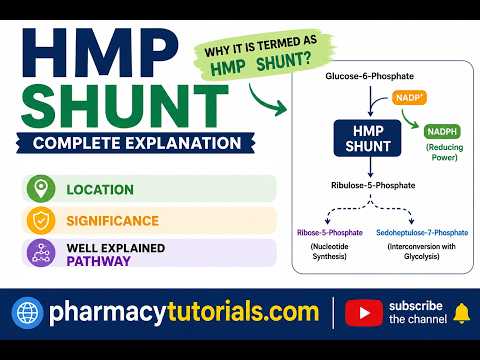
The Hexose Monophosphate Shunt, also known as the Pentose Phosphate Pathway, is an alternative pathway for the oxidation of glucose that occurs in the cytoplasm of cells.
This is an alternative pathway to glycolysis and TCA cycle for the oxidation of glucose.
HMP shunt is also called the Pentose Phosphate Pathway (PPP) because one of its major products is pentose phosphates, particularly ribose-5-phosphate, a five-carbon (pentose) sugar phosphate.Location of the Pathway
The enzymes of HMP shunt are located in the cytosol. The tissues such as liver, adipose tissue, adrenal gland, erythrocytes, testes and lactating mammary gland, are highly active in HMP shunt.
Why is it called HMP Shunt?
HMP stands for Hexose Monophosphate.
Because the pathway begins with glucose-6-phosphate, which is a hexose (6-carbon sugar) monophosphate. It is called a shunt because it diverts glucose-6-phosphate away from glycolysis into an alternative pathway.Why is it called an alternative pathway to Glycolysis?
The HMP shunt (Pentose Phosphate Pathway) is called an alternative pathway of glucose oxidation because it starts with the same substrate as glycolysis—glucose-6-phosphate (G6P)—but follows a different route and serves different purposes.

Pathway
The pathway consists of two phases: an oxidative phase and a non-oxidative phase.
In the oxidative phase, glucose-6-phosphate is oxidized and decarboxylated to form ribulose-5-phosphate, producing two molecules of NADPH. NADPH is essential for reductive biosynthesis reactions such as fatty acid and cholesterol synthesis and also helps maintain reduced glutathione in red blood cells, protecting them from oxidative damage.
In the non-oxidative phase, ribulose-5-phosphate is converted into ribose-5-phosphate for nucleotide and nucleic acid synthesis or transformed into glycolytic intermediates like fructose-6-phosphate and glyceraldehyde-3-phosphate.
Detailed Pathway Steps

Significance
HMP shunt starts from glucose-6-phosphate and finally produces fructose-6-phosphate and glyceraldehyde-3-phosphate, which can enter glycolysis for energy production.
But this pathway mainly significant to produce NADPH and pentose sugars rather than ATP.
| NADPH Used In | Pentose Sugar (Ribose-5-Phosphate) Used In |
|---|---|
| Biosynthesis of fatty acids | DNA, RNA biosynthesis |
| Biosynthesis of cholesterol | Nucleotide biosynthesis |
| Biosynthesis of steroidal hormones | ATP, GTP, NAD+, FAD synthesis |
| Drug metabolism (Cytochrome P450 system) | |
| Maintaining reduced glutathione (GSH) (Antioxidative action) |

Importance of NADPH
- NADPH is required for the reductive biosynthesis of fatty acids and steroids, hence HMP shunt is more active in the tissues concerned with lipogenesis, e.g. adipose tissue, liver etc.
- NADPH is used in the synthesis of certain amino acids like Glutamate, Glutamine, Proline, Arginine etc.
- NADPH has significant role in free redical scavenging to prevent the Cellular content to get damaged from free radicals.
- High concentration of NADPH in lens of eyes is necessary to preserve the transparency of the lenses.
- NADPH were essentially required to preserve the integrity of RBC membrane.
Glucose 6-phosphate dehydrogenase deficiency
- HMP shunt is the only means of providing NADPH in the erythrocytes. Decreased activity of G6PD impairs the synthesis of NADPH in RBC. This results in the accumulation of methemoglobin and peroxides in erythrocytes leading to hemolysis.
- Some drugs such as primaquine (antimalarial), acetanilide (antipyretic), sulfamethoxazole (antibiotic) or ingestion of some toxic phytochemicals produce hemolytic jaundice in humans in low NADPH condition. Severe infection results in the generation of free radicals (in macrophages) which can enter RBC and cause hemolysis (due to decreased NADPH). Thus G6PD is very essential to prevent from this conditions by producing NADPH.
G6PD deficiency helpful in protection from Malaria
The malaria parasite lives inside red blood cells (RBC) and uses hemoglobin for nutrition. During this process, many toxic oxygen radicals are produced. The parasite itself is also sensitive to oxidative damage. This condition is generated by the malaria parasite, but this condition is also not suitable for malaria parasite itself and the growth of malaria parasite decreases.
But due to less NADPH, the cell membrane integrity of RBC is affected and these defected cells in which NADPH is less and cell membrane integrity is also less and malaria parasite is present, these kinds of cells are easily identified and get destroyed in spleen. Destruction of infected cell is helpful in controlling the growth of malaria parasite. So, the people with mild Glucose-6-phosphate dehydrogenase deficiency are often partially protected against severe Malaria, especially malaria caused by Plasmodium falciparum.